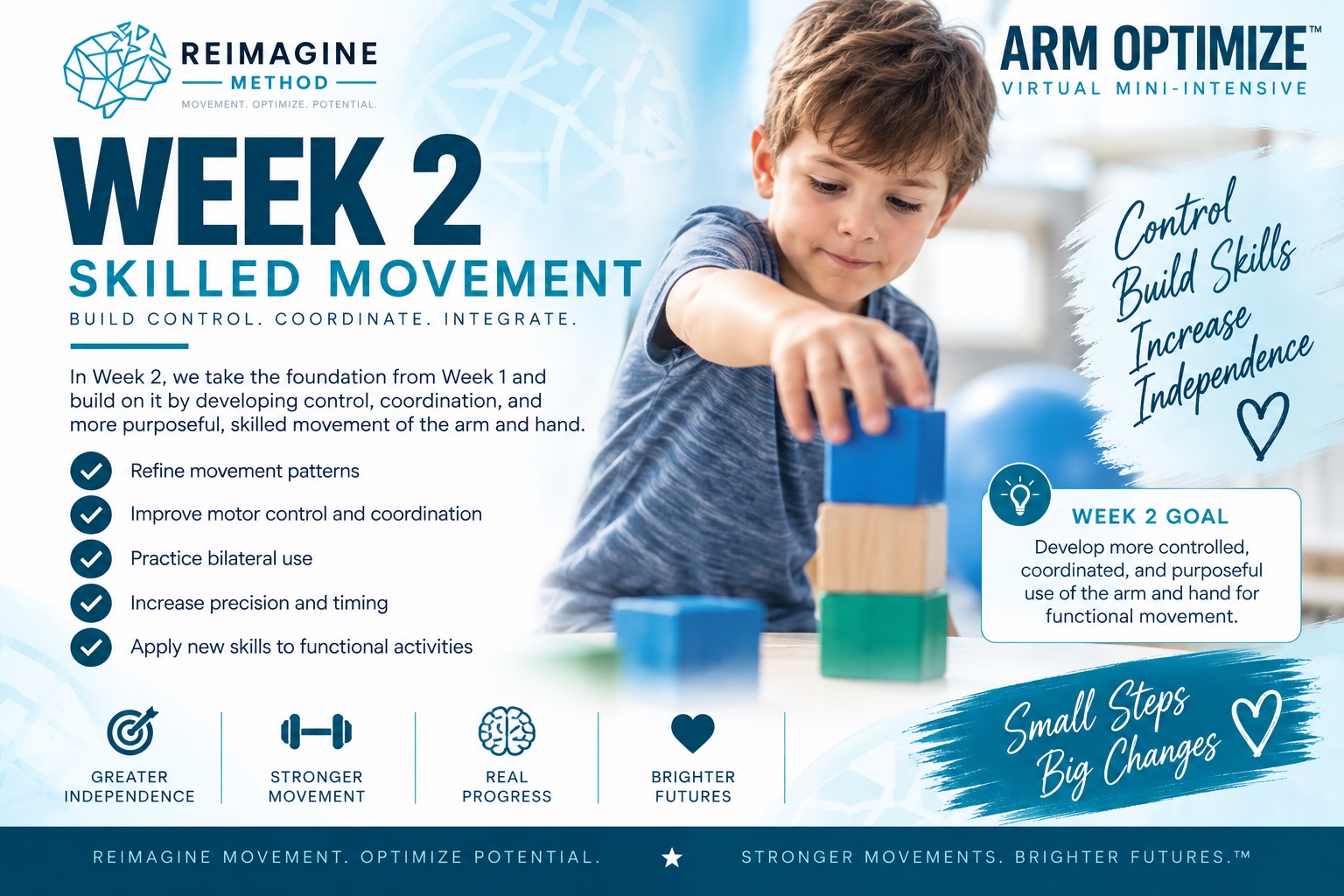
In Week 2 we take the foundation from Week 1 and build on it by developing control, coordination, and more purposeful, skilled movement of the arm and hand.
- Refine movement patterns
- Improve motor control and coordination
- Practice bilateral use
- Increase precision and timing
- Apply new skills to functional activities
Control • Build Skills • Increase Independence
Week 2 goal
Develop more controlled, coordinated, and purposeful use of the arm and hand for functional movement.
GREATER
Independence
STRONGER
Movement
REAL
Progress
BRIGHTER
Futures
Weekly live coaching
Live coaching: grading precision work and choosing the right bilateral task.
Clinician guide
Clinician guide: Week 2 motor control and dissociation progressions.
Q&A recording
Q&A recording: supination strategies and managing associated reactions.
Week 2 demonstration videos
Playback is available to course members. Locked cards show the focus, cues and takeaways only.
Playback, download and printing are available to course members.
Week 1 & 2 — Postural Control, Stability & Activation
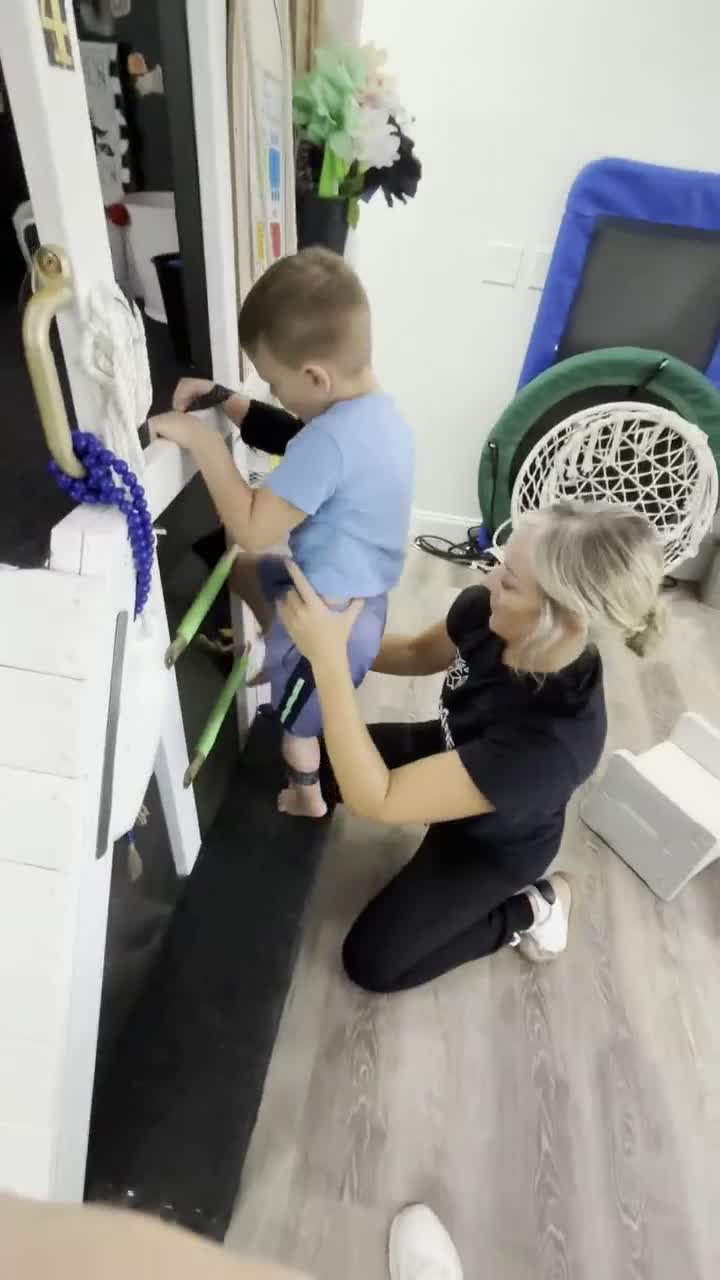
Arm Grasp for Stability (POEE)
The affected arm holds while the body moves around it. Grasp becomes the anchor for postural work instead of the end goal.
Coaching cues
- Set the grip first, then ask for movement of the trunk or legs.
- Watch for wrist flexion creeping in — reset the position rather than pushing through it.
- Count out loud so the hold is predictable and the child can pace effort.
Key takeaways
- Sustained grasp trains endurance that isolated repetitions do not.
- Postural demand and hand demand can be trained in the same rep.
Playback, download and printing are available to course members.
Week 1 & 2 — Postural Control, Stability & Activation
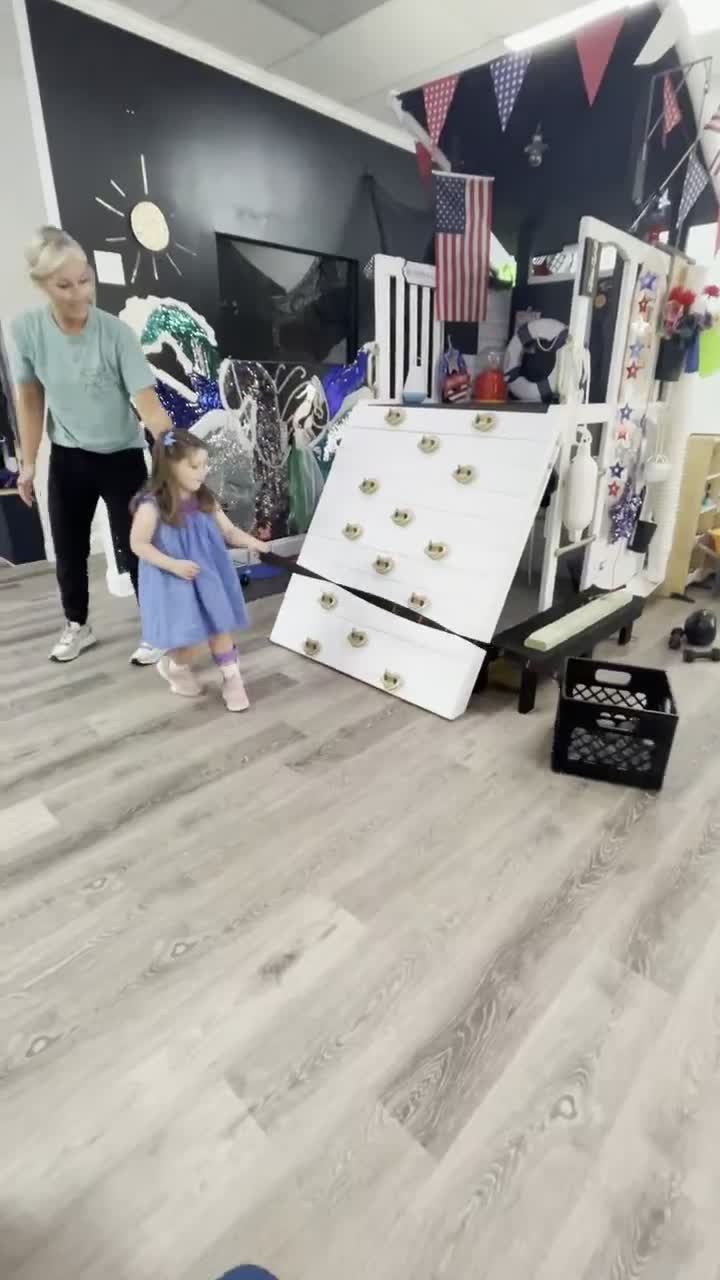
Arm Grasp Pull — Body Ladder
Hand-over-hand pulling drives the body forward, loading the shoulder through range while the trunk stays organized.
Coaching cues
- Anchor the pull low so the shoulder works below 90° before you go overhead.
- Alternate hands to keep both sides in the pattern.
- Stop the set when the trunk starts to twist to substitute for the arm.
Key takeaways
- Pulling patterns recruit the whole chain from hand to hip.
- Bilateral alternation keeps the stronger side from taking over.
Playback, download and printing are available to course members.
Week 1 & 2 — Strength & Stability
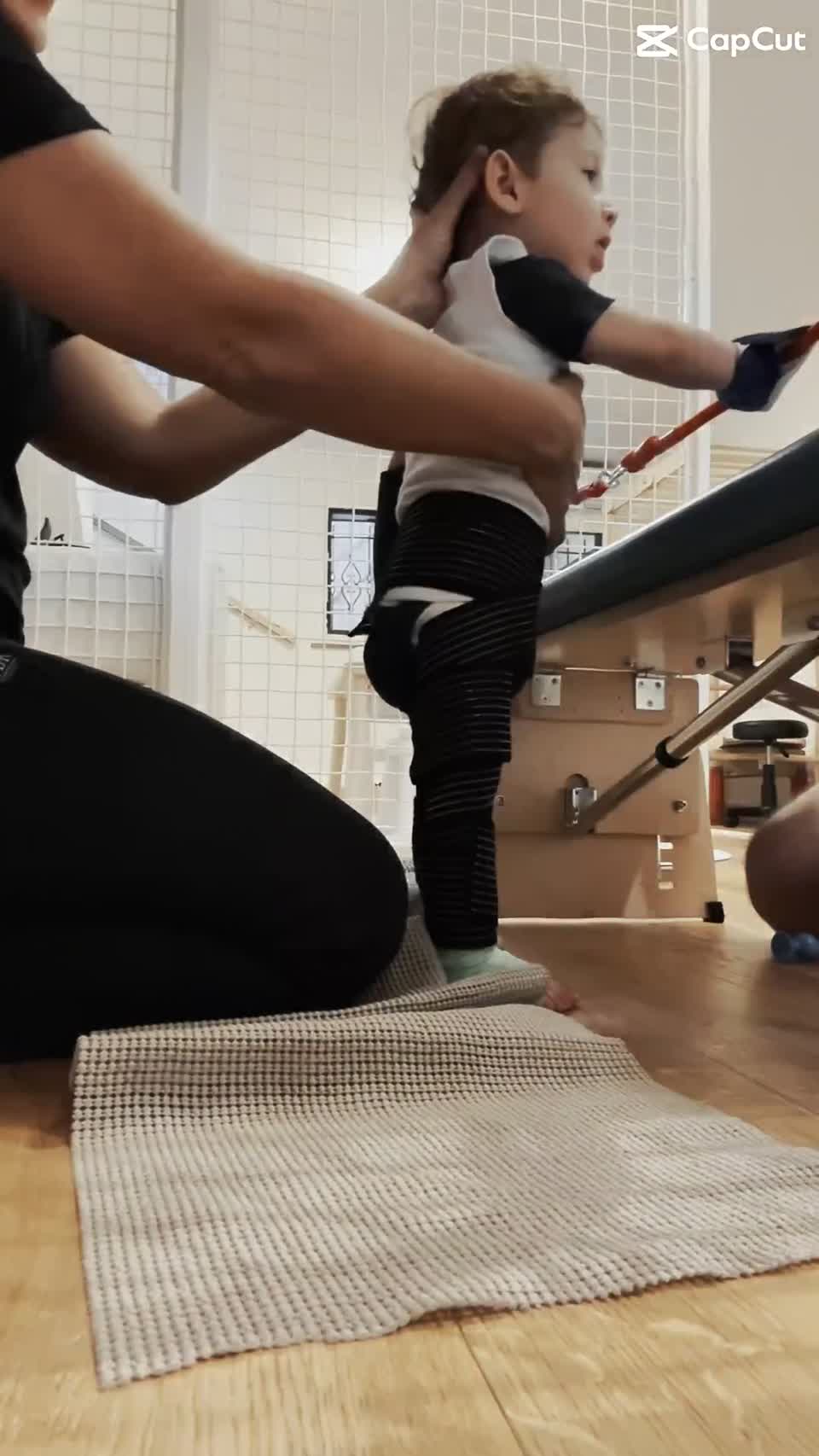
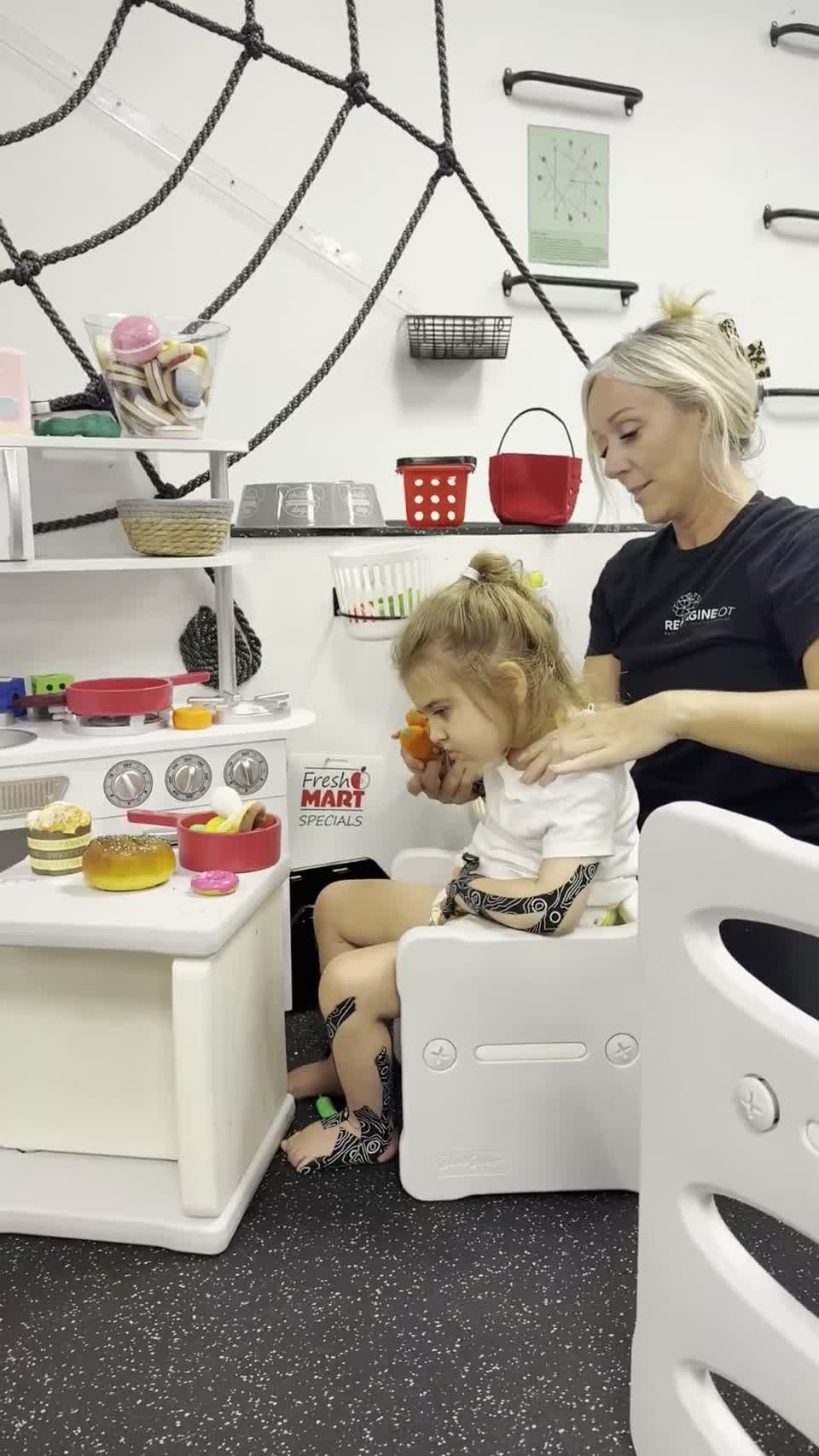
Heavy Pull with Grasp
Resistance gives the hand a reason to hold on. Heavy work builds grip endurance and proximal strength at the same time.
Coaching cues
- Load enough that the child has to set the grip deliberately, not so much that the wrist collapses.
- Keep the elbow tracking close to the body on the first pulls.
- Use full-effort sets of 5–8 with real rest between them.
Key takeaways
- Grip endurance is trainable and it transfers to carrying and dressing.
- Heavy work also delivers proprioceptive input that calms and organizes.
Playback, download and printing are available to course members.
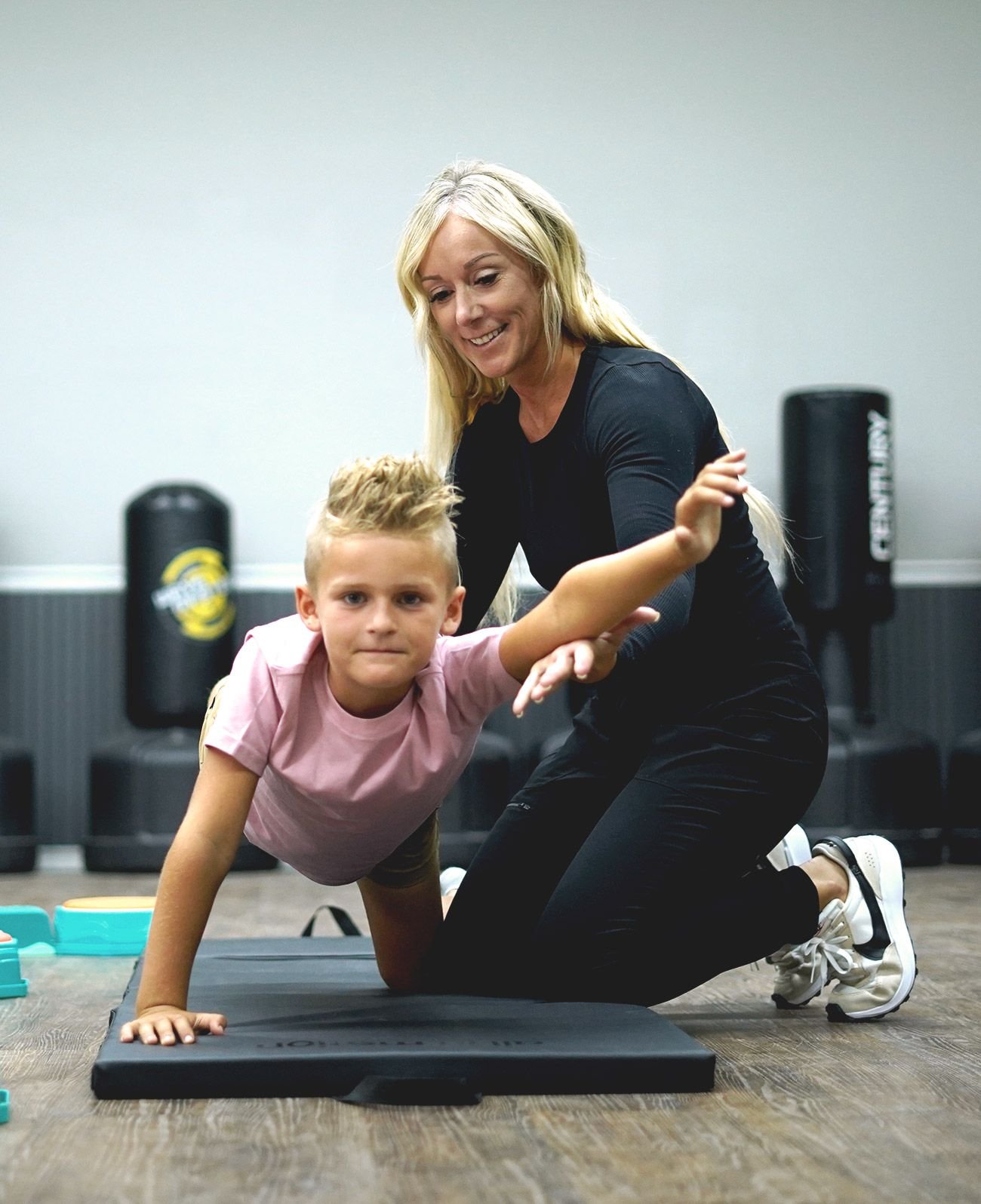
Week 1 & 2 — Dissociation, Postural Stability & Controlled Reach
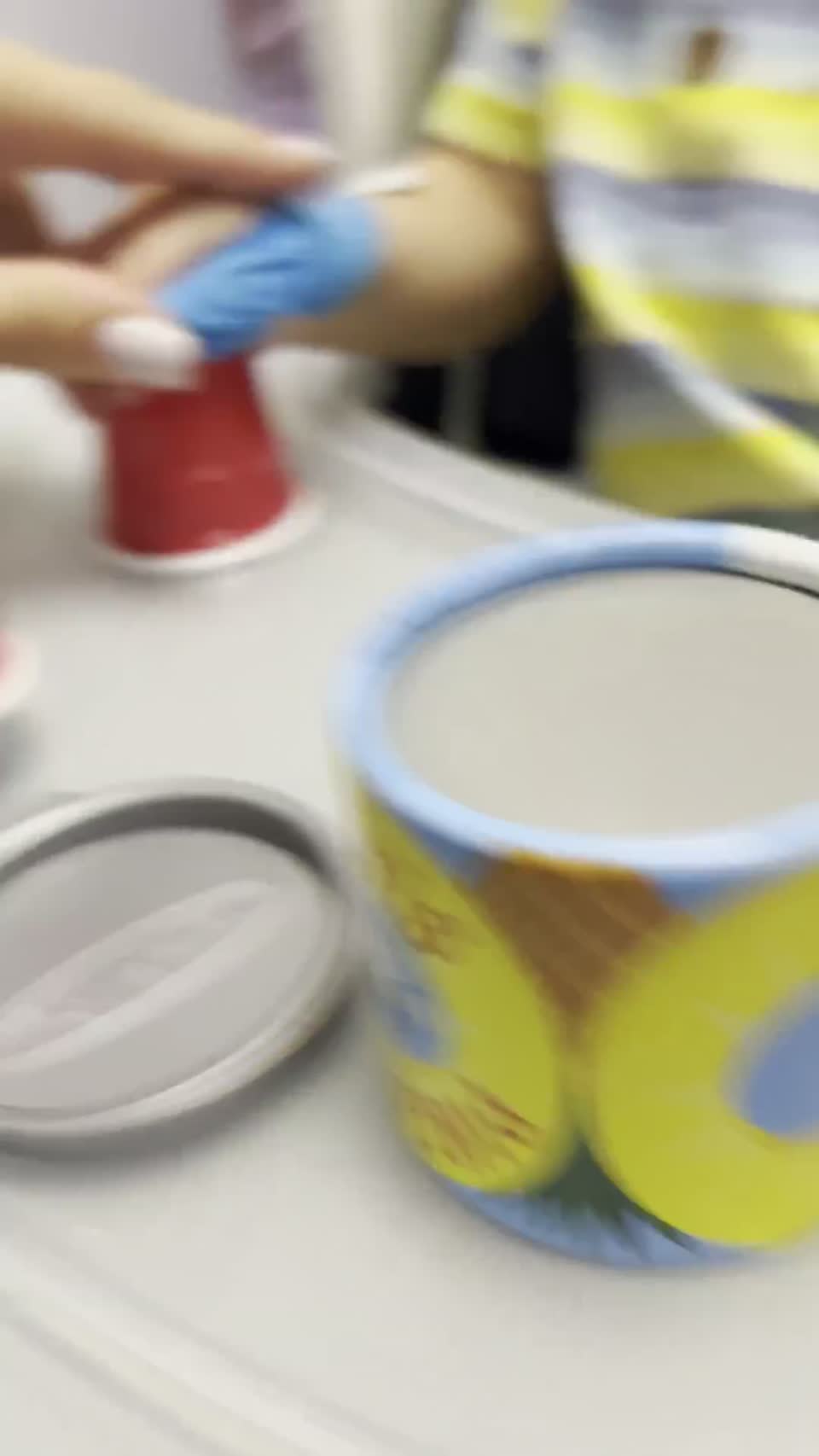
Sit with Reach — Trunk Stability & Dissociation
Reaching across and away from midline in sitting teaches the trunk to hold while the arm travels — the definition of dissociation.
Coaching cues
- Feet supported, hips back — build the base before asking for reach.
- Move the target through arcs: across midline, overhead, then down and out.
- Look for the trunk staying quiet; if it follows the arm, shrink the arc.
Key takeaways
- Controlled reach depends on a trunk that can stay still.
- Range should grow only as fast as control allows.
Playback, download and printing are available to course members.
Week 2 — Skilled Movement & Precision Training
Grasp with Supination
Turning the palm up while holding an object is the pattern behind eating, dressing, and carrying. Here it is trained directly.
Coaching cues
- Start with the elbow tucked at the side to block trunk substitution.
- Ask for palm-up as the object travels, not as a separate movement.
- Add a reason to supinate — receiving, pouring, or showing you the object.
Key takeaways
- Supination is the most functionally valuable forearm gain you can chase.
- Train it inside a task; isolated turning does not carry over.
Playback, download and printing are available to course members.
Week 2 — Skilled Movement & Precision Training
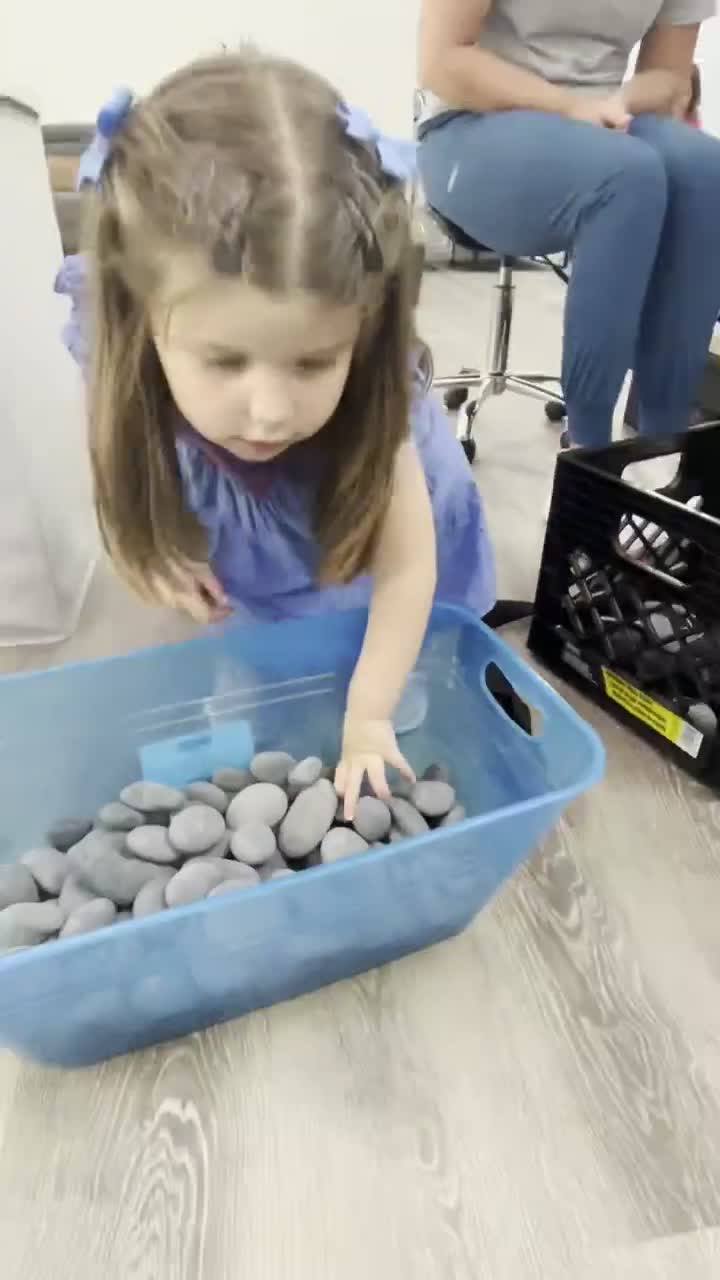
Gross Grasp & Release — Rock
Grasp is only half the skill. Timed, intentional release into a target is what makes the hand usable.
Coaching cues
- Choose an object with weight and texture so both grasp and release are felt.
- Set the release target in view and slightly forward.
- Count the release: "hold — and open." Timing is the skill being trained.
Key takeaways
- Release deserves as many repetitions as grasp.
- Weight and texture make the movement easier to plan.